



A new home for CPAC Systems online
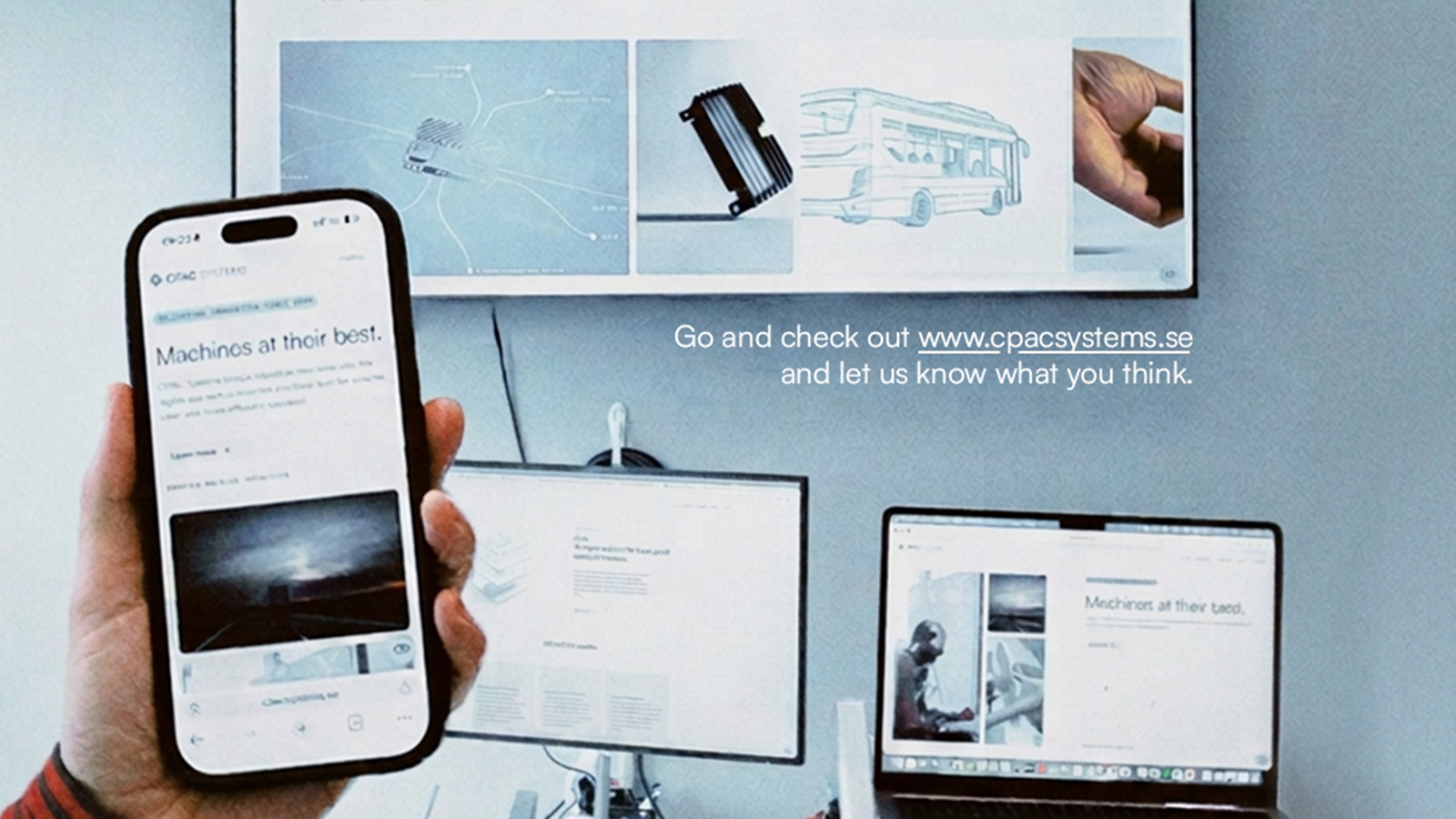
CPAC Systems has launched a new website and a new Insights section. For more than 25 years our work has lived inside other companies' machines, mostly out of sight. This article explains why we rebuilt our digital presence, what we learned along the way, and what other companies in the machine industry can take from it.
Key takeaways
- Industrial buyers and engineers do much of their research online, long before they contact a supplier.
- A website for a technical audience has to answer technical questions - clearly, and without marketing language.
- Structure matters as much as design: clear navigation, product pages with real data, and content that answers questions.
- A website is not a project with an end date. Insights is how we will keep ours useful.
Why digital presence matters in the machine industry
The machine industry has long been built on relationships. Deals start at trade fairs, through recommendations and in long technical discussions between engineering teams. That has not disappeared, but the way the first contact happens has changed.
According to Gartner, B2B buyers spend only around 17 percent of their buying journey meeting potential suppliers, and that time is shared across every supplier they consider. A larger share, around 27 percent, goes to independent research online. For a supplier, that means most of the evaluation happens when no one from the company is in the room.
For industrial technology this applies to several groups at once:
- Engineers who need to know if a component fits their architecture, interfaces, protocols, environmental ratings.
- Purchasing teams who compare suppliers and look for signs of stability and long-term support.
- Product and business leaders who look for partners that understand the whole machine, not just a part.
- Future colleagues who want to understand what the company works on before they apply.
Each group arrives with different questions. A website that only says "we are innovative" answers none of them.
What we did with our new website
We started from a simple question: what does someone need to know before they decide to contact us? The answer shaped the structure of the new site.
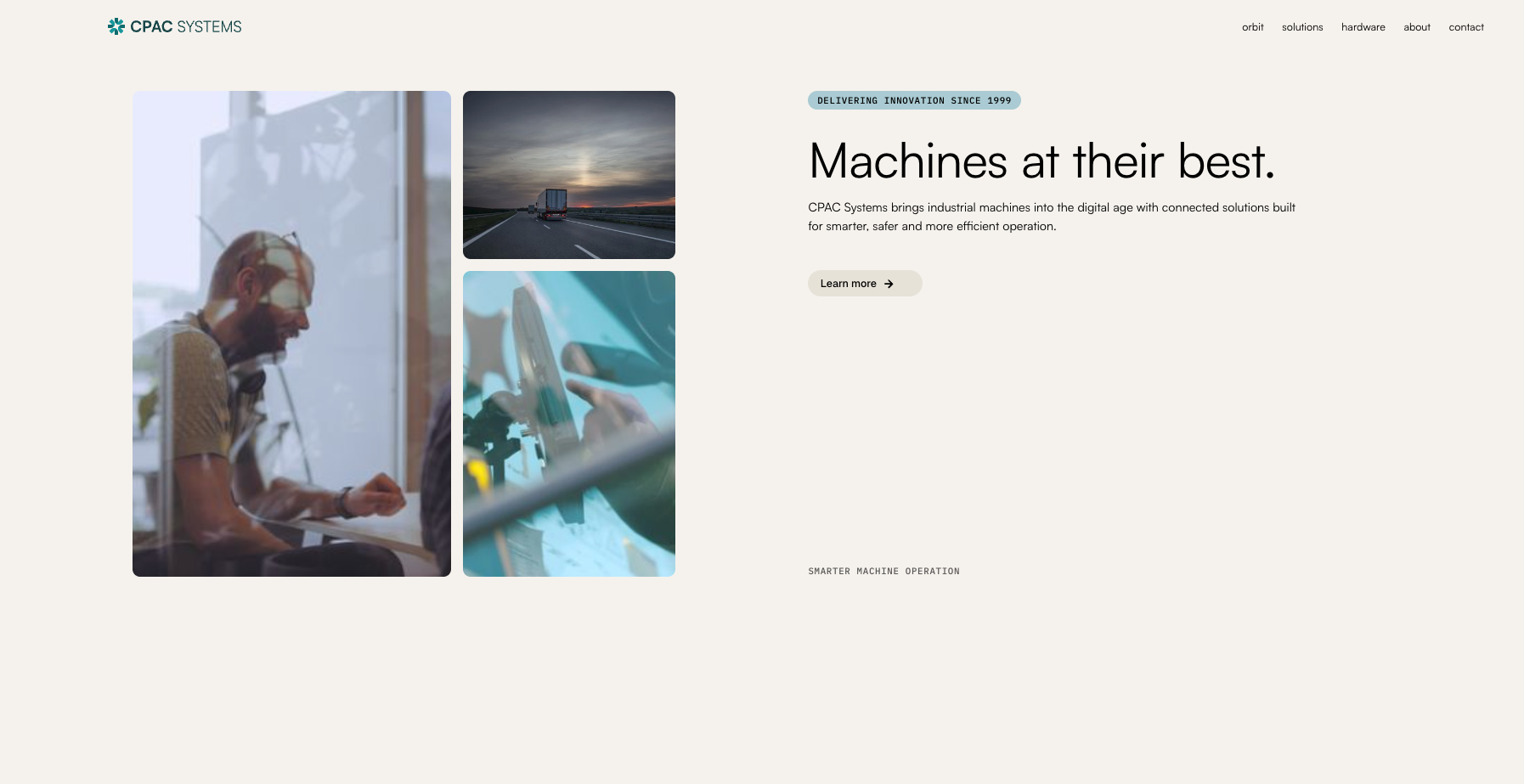
Organised around what we do, not how we are organised. The navigation follows our offer: Orbit, our software platform; solutions for different applications; our hardware ecosystem; and who we are. A visitor should reach the right page in one or two clicks.
Product pages with real information. Engineers want specifications, not adjectives. Our hardware pages describe what each product does and how it connects. For example that IMU2.1 delivers motion data over CAN (SAE J1939), or that Camera F/S transmits video over GMSL2.
A clearer voice. We rewrote our texts to be specific and grounded in real applications, off-highway, marine and industrial machine, and removed claims we could not back up.
What we learned along the way
Rebuilding the website made us look at CPAC Systems from the outside. A few lessons stood out.
Our customers ask about the machine, not about us. The questions that matter to an OEM are practical: does it fit our architecture, which interfaces does it use, how does it handle vibration, water and temperature? A good page answers those questions first.
Facts build more trust than claims. When we wrote about our products, the most convincing sentences were the plainest ones: a protocol, a standard, an operating range.
The whole system is the story. Many customers start with one component and add more over time. Showing how Hydra ECU, the Display suite, sensors, cameras and Orbit work together explained our offer better than presenting each product on its own.
Saying less, more precisely, is harder than it looks. After more than 25 years there is a lot to tell. Choosing what to leave out took more time than writing.
What this means for the machines we help build
The new website reflects how we work with customers. We take part from early concept to series production, and we look at the machine as one system: control, operator environment, connectivity and safety-critical functions.
On the site, OEMs in off-highway, marine and industrial applications can now find:
- Orbit: our platform for software-defined, connected machines
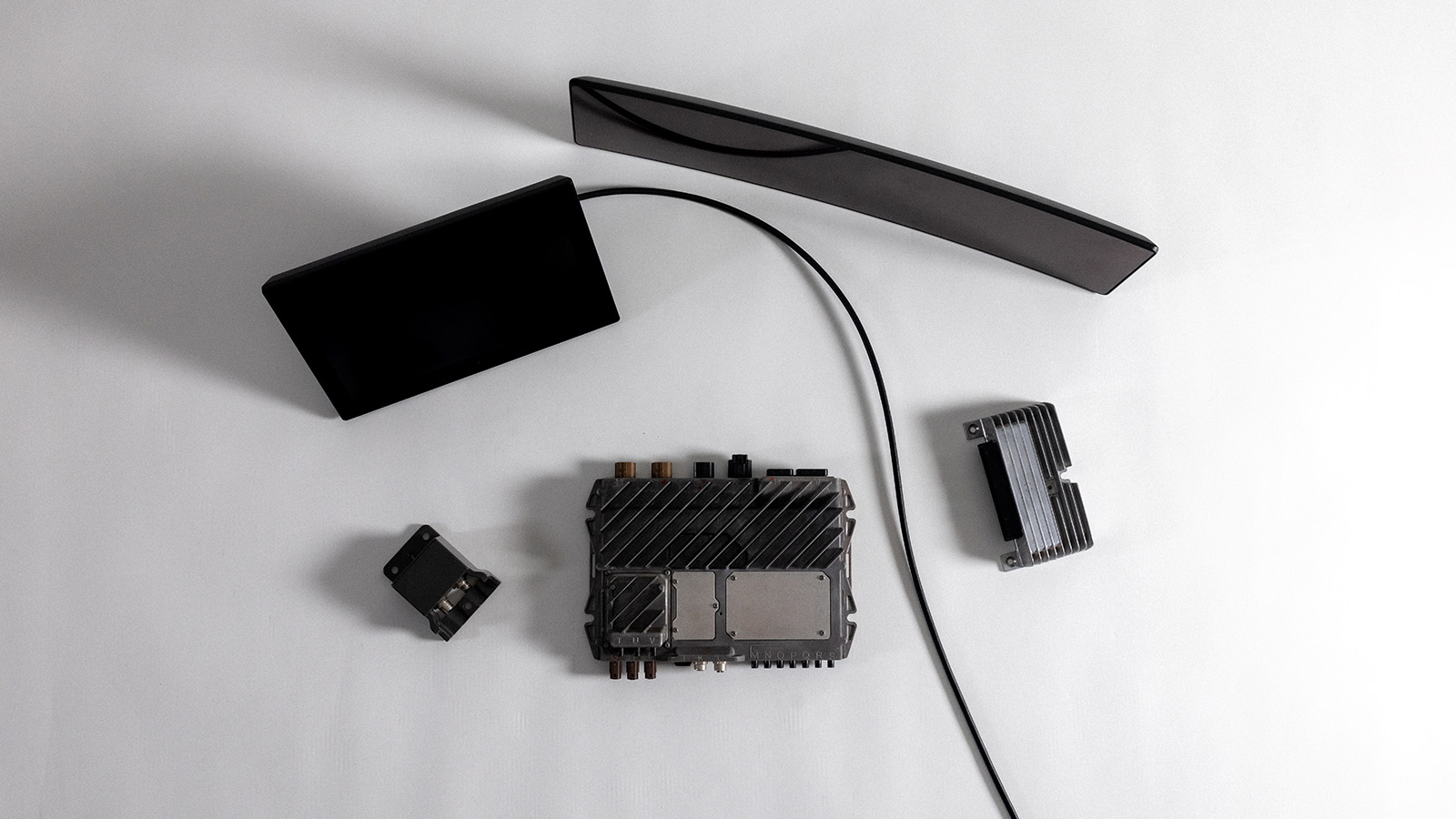
- Our hardware ecosystem: central ECU, operator displays, IMU, control units and cameras
- Solutions: for operator interfaces, assistance functions and vehicle integration
- Insights: articles that go deeper into the technology behind it
What's next for CPAC Systems online
Insights is where we will share what we learn from building control systems for industrial machines. The coming months bring practical guides along with technical explainers and company news.
Frequently asked questions
What does CPAC Systems do?
CPAC Systems develops intelligent control systems for industrial machines and vehicles. We combine mechanics, hardware, electronics and software, and help OEMs build machines that are safer, more intelligent and easier to operate.
Which industries does CPAC Systems work with?
We work with OEMs in off- and on-highway, marine and industrial applications and machines that operate in demanding environments where reliability and operator safety are critical.
What products does CPAC Systems offer?
Our hardware ecosystem includes the Hydra ECU, the Display suite (8", 12.8" and 24" curved), the IMU2.1 inertial measurement unit, the APC control unit and the Camera F/S. They can be combined, integrated with our software platform Orbit, or connected to third-party systems.
What will Insights cover?
Insights covers control systems, operator environments and digital machine intelligence: practical guides, technical explainers and news from CPAC Systems.
Get in touch
Are you developing machines that need control systems, operator interfaces or a connected platform? Explore our hardware and Orbit, read who we are, or contact us to start a conversation.